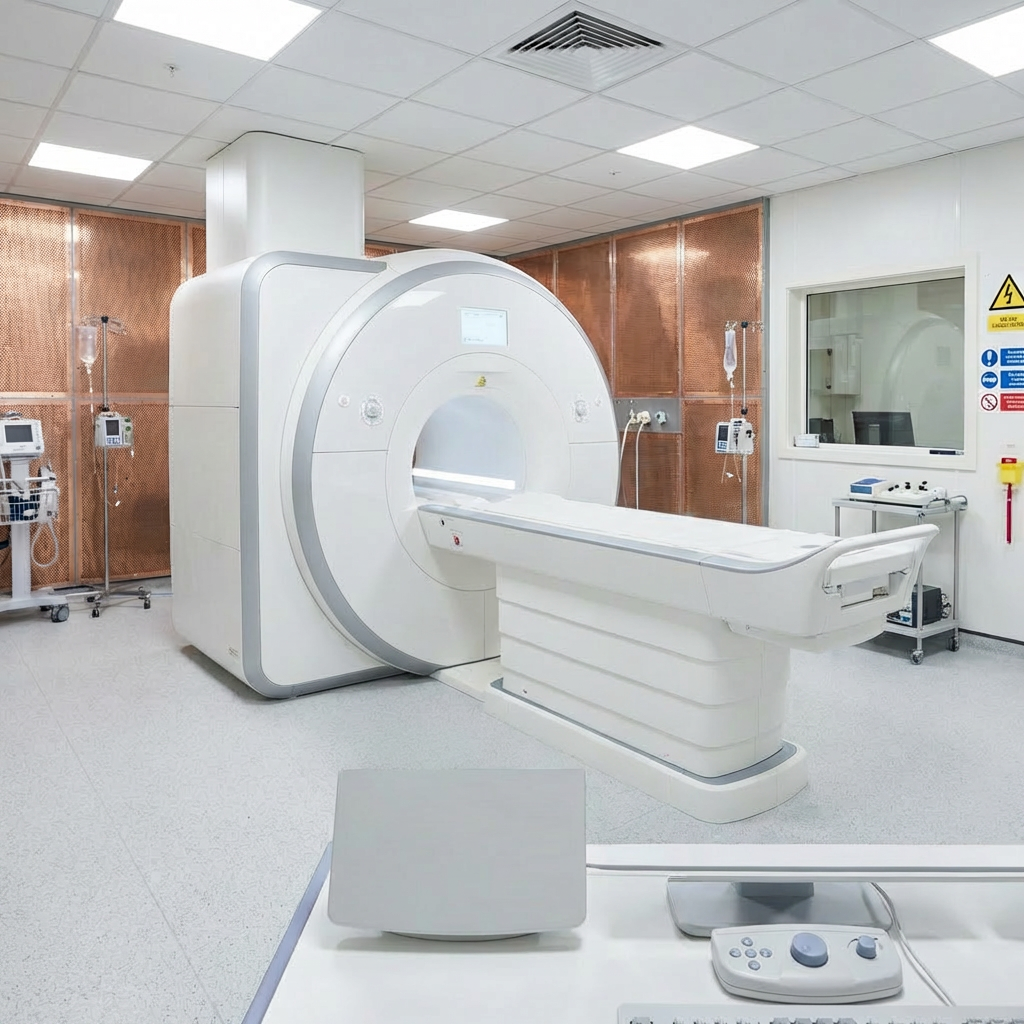
The second MRI was completed this afternoon—the one that will tell us whether the chemotherapy worked. What am I hoping for? A pathological complete response, or pCR: the absence of all invasive cancer cells in my tissue samples after neoadjuvant treatment. Achieving pCR indicates a strong response and is a key marker of improved long‑term survival.
The first phase of cancer treatment is complete: chemotherapy—fifteen weeks of it. Oncologists chose the neoadjuvant route, and now we wait for the scans to show how the cancer responded. Those results will determine the type of surgery and what comes next.
I didn’t have much motivation to write during treatment. It felt like I was suspended somewhere between an incubator and a prison cell—just waiting for release. That release came on Friday, and it was a powerful feeling.
Now, I turn toward phase two: surgery.
Someone once compared this journey to a triathlon. If that’s true, then I’ve finished the swim. Next is the bike, followed by radiation, the final run. It’s a fitting analogy. This hasn’t been a pleasant experience, but I’m deeply grateful for the support that carried me through.
Today, I’m calling it Week One of The Rebuild.
Why rebuild? Because in these past weeks, I gained ten pounds, lost my hair, and lost my ability to run. What used to be an easy three-mile jog now takes real effort. But chemotherapy is behind me, and this is where I begin again.
Kyle, my infusion nurse for the week, stood in the doorway of the cramped infusion room where I sat reclined, staring somewhere between the ceiling tiles and my own uncertain future.
“Let’s do it,” I said, pushing my reclined chair upright.
“I think this one goes in the right leg.” He said.
“Yes, you’re right,” I replied. “I still remember who gave what and where. Week 1 – Nurse Jenna did the left leg. Week 4 – You did the right. Week 7 – Nurse Amber injected the left. And now you get the right again. This is the last one, correct?”
“Yes, this is it,” Kyle confirmed. Then he added, “But you’ll still have the Zoladex shot.”
“That’s fine,” I said. “At least that one isn’t cardiotoxic like this one. From what I understand, though, this drug is the most effective for the type of cancer I have… or hopefully had.”
He pulled up a stool in front of me as I rolled down my pant leg, exposing my right thigh.
I sat.
Ready.
“Ok” I said. “Let’s go.” And I looked away.
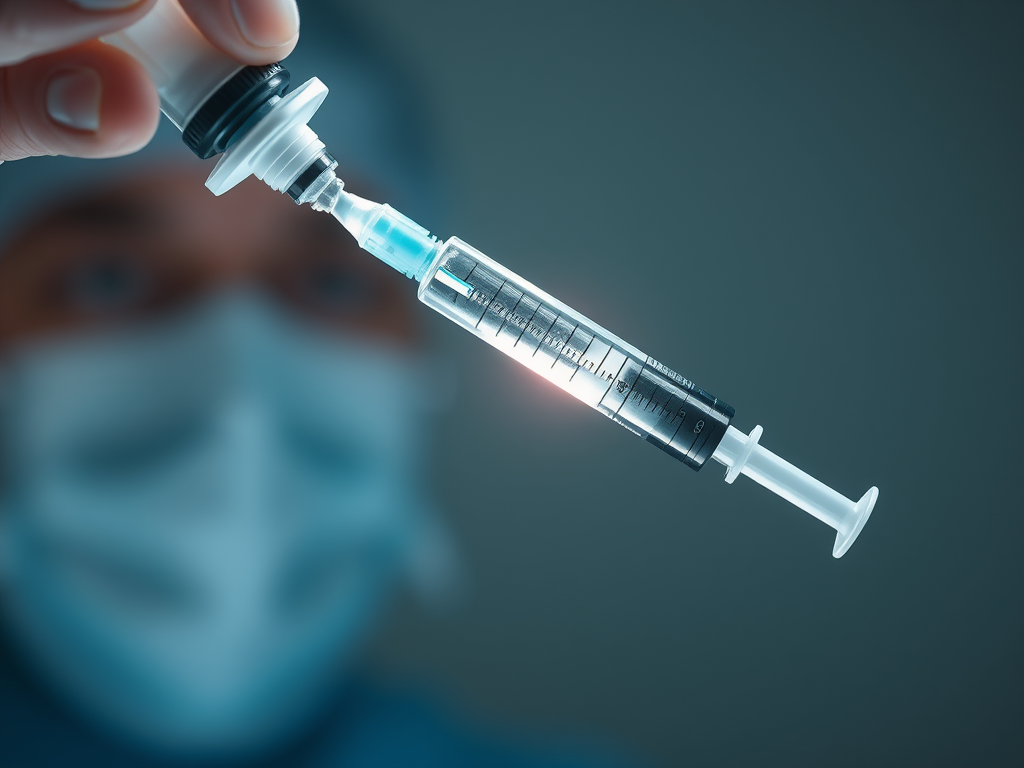
He started the timer. Five minutes to slowly push the medication in.
The initial puncture stung. I pulled my focus away from the needle and into the distance….into the future.
This is it, I thought. I’m almost done with this phase of treatment.
What comes next? With my life, I mean.
I’m at the heaviest weight I’ve ever been. My resting heart rate is higher than I’ve ever known it to be. Food makes me queasy. My energy is foreign to me…. muted, dulled.
All I know is that I want this to be over.
Will I beat cancer? I don’t know. I hope so. But hope and certainty are not the same thing.
They say I caught it early. Lucky.
Lucky.
If I were lucky, I wouldn’t have gotten it at all.
I still can’t believe I got cancer.
It’s almost over, I reminded myself. Soon I’ll be able to travel again. Maybe visit my parents. Maybe sit across from my mom again.
Maybe, someday, I’ll look back and think That wasn’t so bad.
I shouldn’t say that. It isn’t over yet.
Four more weeks.
At least I’m done with this shot.
I hope my heart tolerated it well. I’ll find out next week when an echocardiogram is performed.
My life has changed. For the better? I don’t know.
What I do know is this:
I’m still here.
Right now, that has to be enough.
“Ok. Ms. Dantes, Times up” Kyle said and pulled the needle out my right thigh and quickly pressed a bandage over the puncture wound.
By mail, this weekend, I received the Autumn 2025 Newsletter from the 50 States Marathon Club—Volume 24, Issue 3. I flipped to page four and found the column announcing Club Marathon Reunions. There it was: the first reunion of 2026, scheduled for February 1st in Jacksonville, Florida, at the Donna Finish Breast Cancer Marathon.
I couldn’t attend last year’s end-of-year reunion, where my 50 States Trophy would have been presented. At the time, I was in the middle of biopsies and diagnostic medical appointments, travel, especially to Columbus, Ohio, was simply not possible. My focus then was not celebration.
Reunions are where finisher trophies are awarded and teammates who have completed the 50 States journey gather, some for the first time, others having walked this road more than once. They are moments of recognition, of closure, of standing together.
And now, here was a reunion close to home, anchored in a cause that lives at the very center of my story now. I didn’t hesitate. I emailed the crew and told them I would be there. I have also registered for the 5K. I will receive my 50 States Marathon award there, surrounded by people who understand exactly what it took to earn it.
I’m looking forward to seeing teammates who may have wondered where I went, and why I disappeared from social media when the 50 States Journey ended. The truth is, I never stopped running – I am just now running a different race.
I always looked forward to the New Year. It felt like a clean reset, a chance to begin again, to set fresh goals, to believe in infinite possibility. Now it’s 2026, and I can’t say it feels the same. I’m grateful to be here, truly, but the familiar spark is muted. The enthusiasm doesn’t arrive as easily.
Cancer treatment has a way of taking ownership of time. Planning feels fragile, provisional, almost borrowed. Yet when I sit with that thought, I realize nothing has really changed since years passed. I have always only had the present moment.
What feels different now is awareness. The sense that moments are numbered, that the once-infinite horizon has narrowed into something more finite, more defined. Yet, that too, is perception. The limit was always there…I just didn’t notice it. There were never more than moments. There have only ever been moments.
I don’t know why bitterness visits me right now. I know others would long for the prognosis I’ve been given. I know this is a gift, and that gifts are not meant to be squandered. None of us should squander them.
Yet still, it is hard. It is hard to live with pain, with uncertainty, with the constant effort to fill a void. Gratitude and bleakness can exist in the same breath…..and lately, they do.
There are moments when you realize life will never return to what it once was. The moment itself is brief, almost unremarkable, but the awareness stretches far beyond it, settling in and refusing to leave.
I don’t pretend to understand life. I move through it the only way I know how, by following the rhythm of days, keeping pace with what comes next. Not because I have answers, but because stopping isn’t an option. Giving up isn’t on the table. So, I do the simplest, hardest thing there is: I keep going.
The holidays have a way of slowing time just enough to make you look back. They invite reflection—on years when life felt fuller, when meaning arrived more easily, when the future didn’t feel quite so loaded. Those memories surface without asking permission, bringing both warmth and ache in equal measure.
These days, life feels less about building and more about enduring. Not in a dramatic sense…….there is no grand despair here. Just the steady act of survival. Showing up. Moving forward. Allowing the days to pass, one after another, trusting that persistence itself holds its own purpose.
“Would you be interested in an art project today?”
The woman approached my recliner just as the infusion bag emptied and the final flush began to drip. Her name tag identified her as a volunteer. She carried a clear tote filled with tiny craft supplies: small cotton balls, glitter, ribbon. She held up the finished example, a clear plastic heart, painted and strung with ribbon, filled with cotton and sparkle to resemble falling snow.
“You’re supposed to make something like this,” she said.
I glanced around the infusion room. Most of the other patients, many in probably their sixties, looked tired and worn, focused only on leaving their chairs as soon as they were allowed. I imagined paints and crafts felt far from anyone’s mind.
“Sure,” I said.
I didn’t want her volunteer efforts to go unnoticed. She had shown up with intention, hoping to make the infusion center feel a little warmer, a little more human. A gesture like that deserved to be met with kindness.
“What colors would you like?” she asked.
“Blue and gold.”
“And the ribbon?”
“Orange.” I said.
As the nurse stepped in to remove my IV, I kindly asked the volunteer to hand the supplies to my husband. He had been beside me the entire time, working through a cryptic crossword puzzle, watching me closely through the haze of Benadryl I had worried about all week.
Today went well. It was week two, a lighter day. I received only one drug along with the pre-meds. The Benadryl dose was lowered after last week’s reaction that had knocked me out cold. This time, I felt okay.
“Do you know what the orange electrical outlet stands for?”
“I have no idea…though that looks more red than orange, don’t you think?” I replied to my husband as we sat in the doctor’s office waiting on the results of my latest labs.
“There’s a red switch too. Let’s find out,” he said, already pulling out his phone to Google it.
Labs again. I’d just had blood drawn two nights ago in the ER. My poor right arm—pricked one too many times this week. Still, it’s strong. It can handle needles. I’m continually amazed by how much information can be pulled from a few small vials of blood.
Sodium. White blood cell count. Anion gap. Terms I’m quickly becoming familiar with. On MyChart dashboards, I’ve turned it into a game—trying to land each number back in the normal range.
Sodium’s been low. I need more salt. Perfect. A bag of popcorn for later tonight.
You’re probably wondering how I ended up in the ER. Right…yes…. I was getting to that.
After my late evening journal entry, I couldn’t stop shivering. My temperature kept climbing. I’d been told to notify the on-call oncologist if I developed a fever of 100.4 after infusion. It reached 101.7. I called. They asked me to come in and get checked.
I’m glad I did. I felt awful.
The ER lobby was packed. I checked in, explained I’d had my first infusion, that my body ached, my throat was sore, I was shivering, and I felt unwell.
Test after test. They discovered I had tonsillitis.
“Was it caused by the infusion?” I asked.
Hard to say, they told me, but unlikely. More likely something lingering that fully flared up. It’s difficult to pinpoint.
They started antibiotics, gave fever reducers, ran a CT scan, throat swab, nasal swab, and more tests. Slowly, I came back to life. Eventually, they discharged me in the wee hours of the morning.
We walked out past a waiting room still full of people hoping to be seen.
Yesterday became a day of rest—focused on recovery, on feeling better. One nap followed another until sunset. I did manage to get out for my 45-minute walk, though it was hard. I’m proud of that one. After all, isn’t it when you feel the worst that training matters most?
“I found it,” my husband said at last. “Red electrical outlets mean they’re connected to backup generators.”
I sit here typing, shivering beneath a multicolored yarn blanket my mom knitted many years ago. My husband is in the far corner of the room, laptop open, headphones on…..present, steady, in his own quiet lane.
I kept my routine nutrition plan and completed my 45-minute outdoor workout.
I feel unwell. My body aches. My throat is sore.
I promised myself I would not complain through this, so as you read these words, read them as observations….facts recorded…..not as expressions of complaint or a request for pity.
I’ve been fortunate to tolerate only mild nausea, and when I say mild, I mean truly mild. That has been managed well with morning ginger tea and nightly peppermint tea.
Now I sit beneath a heating pad my husband brought over, the same one we used during his bike accident recovery. It’s striking how this year both arrived and is closing with its share of challenges.
I know I will get better. I am confident in my recovery. I look forward to having this cancer out of my system. Oh and if you got this far, I Thank You for reading.
We made the 30-minute drive to the cancer center and checked in about three minutes late. Within moments, they had me back for vitals and then guided me to the infusion area. I was assigned a nurse and asked to take a seat in a comfortable recliner. Given my age, I first had to complete a pregnancy test…standard protocol. Once that was done, we were ready to begin.
The nurse walked me through the plan- first, pre-medications—anti-allergy meds and steroids to reduce the risk of reactions. Then an injection in my left thigh containing two treatment medications. Finally, the main chemotherapy infusion through IV.
She explained everything carefully, including the common reactions to each medication, and then we started.
The first anti-allergy medication went in without issue. The second one hit hard. Suddenly, I felt faint—like I might pass out. I reached for my husband, who was sitting nearby, and then I was asleep.
When I woke, I could hear several nurses around me. They lowered my recliner fully, placed an ice pack on my back, and checked my vitals. My blood pressure was stable, but my heart rate had dropped. Someone mentioned that I looked pink and asked if I had cotton mouth. I did.
They started a saline bag, and within about 30 minutes, I came back—still woozy, but alert.
At one point I asked my nurse, half-jokingly, if I’d be judged for pulling a stuffed animal out of my bag. She smiled and said, Absolutely not. You should see what people bring in here. She told me one patient brings a weighted stuffed animal. I asked my husband to hand me my Stitch. I set him beside me and immediately felt calmer, grounded, comforted.
My nurse let me know she’d be contacting the care team to adjust the dosage of the medication that caused the reaction. I had been given a high dose in preparation for the chemo to follow.
Next came the injection. She warned me it would burn for about eight minutes and apologized in advance. I told her it was ok. When it started, I felt some burning—but nothing unmanageable. Eight minutes later, it was done. The best part? I won’t have to do that one weekly.
Then came the main event.
The nurse returned carrying a bag clearly marked with toxicity warnings. She wore thick gloves and a blue protective cover over her scrubs. I remember thinking, That’s being handled with serious care… and it’s going into my body.
She hooked it up and told me she would sit directly in front of me for the first ten minutes to monitor for reactions. She reassured me that if anything went wrong, she had medications ready to counteract it. I gave her a thumbs-up, still drowsy from the earlier meds, fighting to stay awake.
Then she said, It’s okay—you don’t have to be awake for this.
I stopped fighting.
As I drifted off, I glanced at my feet stretched out in front of me—wearing my Salomon Speedcross 6 trail shoes. The same shoes I plan to take with me to the Gobi Desert March in 2027.
I slept deeply—no dreams, just darkness.
When I woke, the nurse told me the infusion was almost complete. She reviewed aftercare instructions with my husband: nausea may start around day three; try medication A first, then medication B if needed, and message the care team through MyChart if symptoms persist. That’s about all I remember.
We left the infusion center, and I waited in the lobby while my husband brought the car around. I fell asleep again in the passenger seat and woke as we entered the garage at home.
Day 1: done.
I’ve decided to start a personal challenge—my own version of 75 Hard, which I’m calling 85 Strong.
I won’t be able to go as hard as I normally would, but the discipline matters. The structure matters. I have 81 days of treatment in Phase I, and this challenge will help keep my mind focused on the process.
The rules are the same as 75 Hard, with one added requirement: no complaining.
I’ll continue both indoor and outdoor workouts—adjusted as needed. This is mental training as much as physical. Preparation not just for treatment, but for what comes after.





 Journaling was Recommended