Kyle, my infusion nurse for the week, stood in the doorway of the cramped infusion room where I sat reclined, staring somewhere between the ceiling tiles and my own uncertain future.
“Let’s do it,” I said, pushing my reclined chair upright.
“I think this one goes in the right leg.” He said.
“Yes, you’re right,” I replied. “I still remember who gave what and where. Week 1 – Nurse Jenna did the left leg. Week 4 – You did the right. Week 7 – Nurse Amber injected the left. And now you get the right again. This is the last one, correct?”
“Yes, this is it,” Kyle confirmed. Then he added, “But you’ll still have the Zoladex shot.”
“That’s fine,” I said. “At least that one isn’t cardiotoxic like this one. From what I understand, though, this drug is the most effective for the type of cancer I have… or hopefully had.”
He pulled up a stool in front of me as I rolled down my pant leg, exposing my right thigh.
I sat.
Ready.
“Ok” I said. “Let’s go.” And I looked away.
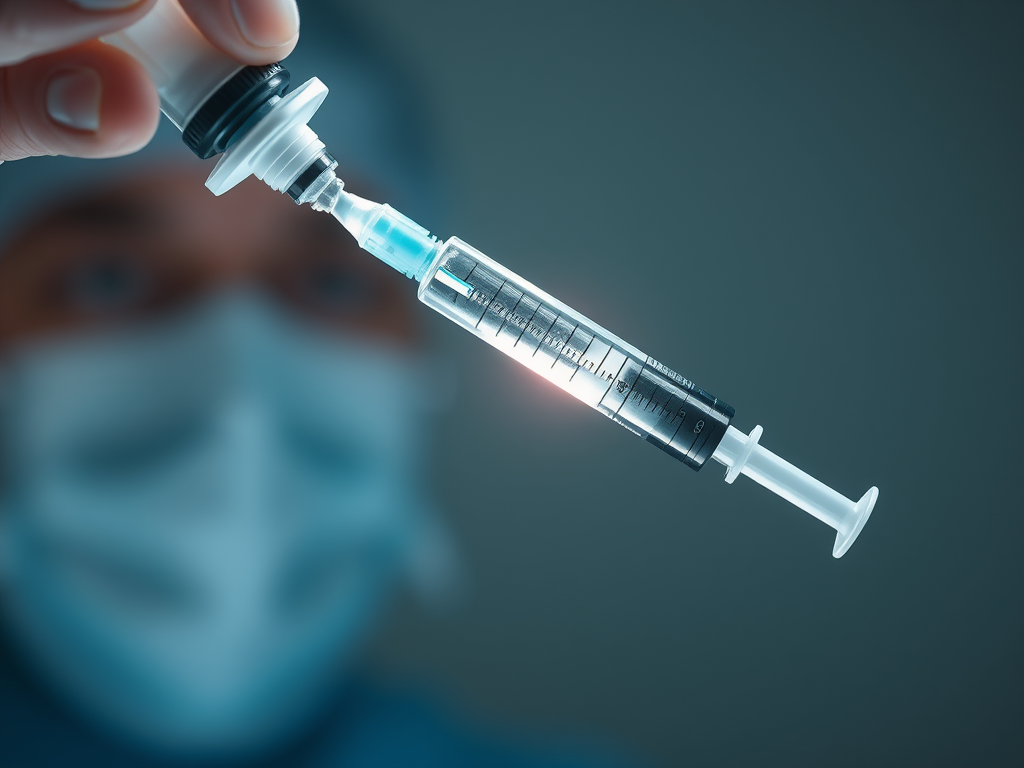
He started the timer. Five minutes to slowly push the medication in.
The initial puncture stung. I pulled my focus away from the needle and into the distance….into the future.
This is it, I thought. I’m almost done with this phase of treatment.
What comes next? With my life, I mean.
I’m at the heaviest weight I’ve ever been. My resting heart rate is higher than I’ve ever known it to be. Food makes me queasy. My energy is foreign to me…. muted, dulled.
All I know is that I want this to be over.
Will I beat cancer? I don’t know. I hope so. But hope and certainty are not the same thing.
They say I caught it early. Lucky.
Lucky.
If I were lucky, I wouldn’t have gotten it at all.
I still can’t believe I got cancer.
It’s almost over, I reminded myself. Soon I’ll be able to travel again. Maybe visit my parents. Maybe sit across from my mom again.
Maybe, someday, I’ll look back and think That wasn’t so bad.
I shouldn’t say that. It isn’t over yet.
Four more weeks.
At least I’m done with this shot.
I hope my heart tolerated it well. I’ll find out next week when an echocardiogram is performed.
My life has changed. For the better? I don’t know.
What I do know is this:
I’m still here.
Right now, that has to be enough.
“Ok. Ms. Medina, Times up” Kyle said and pulled the needle out my right thigh and quickly pressed a bandage over the puncture wound.
“Would you be interested in an art project today?”
The woman approached my recliner just as the infusion bag emptied and the final flush began to drip. Her name tag identified her as a volunteer. She carried a clear tote filled with tiny craft supplies: small cotton balls, glitter, ribbon. She held up the finished example, a clear plastic heart, painted and strung with ribbon, filled with cotton and sparkle to resemble falling snow.
“You’re supposed to make something like this,” she said.
I glanced around the infusion room. Most of the other patients, many in probably their sixties, looked tired and worn, focused only on leaving their chairs as soon as they were allowed. I imagined paints and crafts felt far from anyone’s mind.
“Sure,” I said.
I didn’t want her volunteer efforts to go unnoticed. She had shown up with intention, hoping to make the infusion center feel a little warmer, a little more human. A gesture like that deserved to be met with kindness.
“What colors would you like?” she asked.
“Blue and gold.”
“And the ribbon?”
“Orange.” I said.
As the nurse stepped in to remove my IV, I kindly asked the volunteer to hand the supplies to my husband. He had been beside me the entire time, working through a cryptic crossword puzzle, watching me closely through the haze of Benadryl I had worried about all week.
Today went well. It was week two, a lighter day. I received only one drug along with the pre-meds. The Benadryl dose was lowered after last week’s reaction that had knocked me out cold. This time, I felt okay.
“Do you know what the orange electrical outlet stands for?”
“I have no idea…though that looks more red than orange, don’t you think?” I replied to my husband as we sat in the doctor’s office waiting on the results of my latest labs.
“There’s a red switch too. Let’s find out,” he said, already pulling out his phone to Google it.
Labs again. I’d just had blood drawn two nights ago in the ER. My poor right arm—pricked one too many times this week. Still, it’s strong. It can handle needles. I’m continually amazed by how much information can be pulled from a few small vials of blood.
Sodium. White blood cell count. Anion gap. Terms I’m quickly becoming familiar with. On MyChart dashboards, I’ve turned it into a game—trying to land each number back in the normal range.
Sodium’s been low. I need more salt. Perfect. A bag of popcorn for later tonight.
You’re probably wondering how I ended up in the ER. Right…yes…. I was getting to that.
After my late evening journal entry, I couldn’t stop shivering. My temperature kept climbing. I’d been told to notify the on-call oncologist if I developed a fever of 100.4 after infusion. It reached 101.7. I called. They asked me to come in and get checked.
I’m glad I did. I felt awful.
The ER lobby was packed. I checked in, explained I’d had my first infusion, that my body ached, my throat was sore, I was shivering, and I felt unwell.
Test after test. They discovered I had tonsillitis.
“Was it caused by the infusion?” I asked.
Hard to say, they told me, but unlikely. More likely something lingering that fully flared up. It’s difficult to pinpoint.
They started antibiotics, gave fever reducers, ran a CT scan, throat swab, nasal swab, and more tests. Slowly, I came back to life. Eventually, they discharged me in the wee hours of the morning.
We walked out past a waiting room still full of people hoping to be seen.
Yesterday became a day of rest—focused on recovery, on feeling better. One nap followed another until sunset. I did manage to get out for my 45-minute walk, though it was hard. I’m proud of that one. After all, isn’t it when you feel the worst that training matters most?
“I found it,” my husband said at last. “Red electrical outlets mean they’re connected to backup generators.”
I sit here typing, shivering beneath a multicolored yarn blanket my mom knitted many years ago. My husband is in the far corner of the room, laptop open, headphones on…..present, steady, in his own quiet lane.
I kept my routine nutrition plan and completed my 45-minute outdoor workout.
I feel unwell. My body aches. My throat is sore.
I promised myself I would not complain through this, so as you read these words, read them as observations….facts recorded…..not as expressions of complaint or a request for pity.
I’ve been fortunate to tolerate only mild nausea, and when I say mild, I mean truly mild. That has been managed well with morning ginger tea and nightly peppermint tea.
Now I sit beneath a heating pad my husband brought over, the same one we used during his bike accident recovery. It’s striking how this year both arrived and is closing with its share of challenges.
I know I will get better. I am confident in my recovery. I look forward to having this cancer out of my system. Oh and if you got this far, I Thank You for reading.
We made the 30-minute drive to the cancer center and checked in about three minutes late. Within moments, they had me back for vitals and then guided me to the infusion area. I was assigned a nurse and asked to take a seat in a comfortable recliner. Given my age, I first had to complete a pregnancy test…standard protocol. Once that was done, we were ready to begin.
The nurse walked me through the plan- first, pre-medications—anti-allergy meds and steroids to reduce the risk of reactions. Then an injection in my left thigh containing two treatment medications. Finally, the main chemotherapy infusion through IV.
She explained everything carefully, including the common reactions to each medication, and then we started.
The first anti-allergy medication went in without issue. The second one hit hard. Suddenly, I felt faint—like I might pass out. I reached for my husband, who was sitting nearby, and then I was asleep.
When I woke, I could hear several nurses around me. They lowered my recliner fully, placed an ice pack on my back, and checked my vitals. My blood pressure was stable, but my heart rate had dropped. Someone mentioned that I looked pink and asked if I had cotton mouth. I did.
They started a saline bag, and within about 30 minutes, I came back—still woozy, but alert.
At one point I asked my nurse, half-jokingly, if I’d be judged for pulling a stuffed animal out of my bag. She smiled and said, Absolutely not. You should see what people bring in here. She told me one patient brings a weighted stuffed animal. I asked my husband to hand me my Stitch. I set him beside me and immediately felt calmer, grounded, comforted.
My nurse let me know she’d be contacting the care team to adjust the dosage of the medication that caused the reaction. I had been given a high dose in preparation for the chemo to follow.
Next came the injection. She warned me it would burn for about eight minutes and apologized in advance. I told her it was ok. When it started, I felt some burning—but nothing unmanageable. Eight minutes later, it was done. The best part? I won’t have to do that one weekly.
Then came the main event.
The nurse returned carrying a bag clearly marked with toxicity warnings. She wore thick gloves and a blue protective cover over her scrubs. I remember thinking, That’s being handled with serious care… and it’s going into my body.
She hooked it up and told me she would sit directly in front of me for the first ten minutes to monitor for reactions. She reassured me that if anything went wrong, she had medications ready to counteract it. I gave her a thumbs-up, still drowsy from the earlier meds, fighting to stay awake.
Then she said, It’s okay—you don’t have to be awake for this.
I stopped fighting.
As I drifted off, I glanced at my feet stretched out in front of me—wearing my Salomon Speedcross 6 trail shoes. The same shoes I plan to take with me to the Gobi Desert March in 2027.
I slept deeply—no dreams, just darkness.
When I woke, the nurse told me the infusion was almost complete. She reviewed aftercare instructions with my husband: nausea may start around day three; try medication A first, then medication B if needed, and message the care team through MyChart if symptoms persist. That’s about all I remember.
We left the infusion center, and I waited in the lobby while my husband brought the car around. I fell asleep again in the passenger seat and woke as we entered the garage at home.
Day 1: done.
I’ve decided to start a personal challenge—my own version of 75 Hard, which I’m calling 85 Strong.
I won’t be able to go as hard as I normally would, but the discipline matters. The structure matters. I have 81 days of treatment in Phase I, and this challenge will help keep my mind focused on the process.
The rules are the same as 75 Hard, with one added requirement: no complaining.
I’ll continue both indoor and outdoor workouts—adjusted as needed. This is mental training as much as physical. Preparation not just for treatment, but for what comes after.
If I’m going to put myself through treatment, I might as well make it worthwhile. I decided early on that if my experience can help someone else in the future, then I’ll gladly contribute. So, I volunteered as a test subject, agreeing to follow a prescribed workout regimen throughout treatment and undergo periodic physiological testing for a cardiovascular research study.
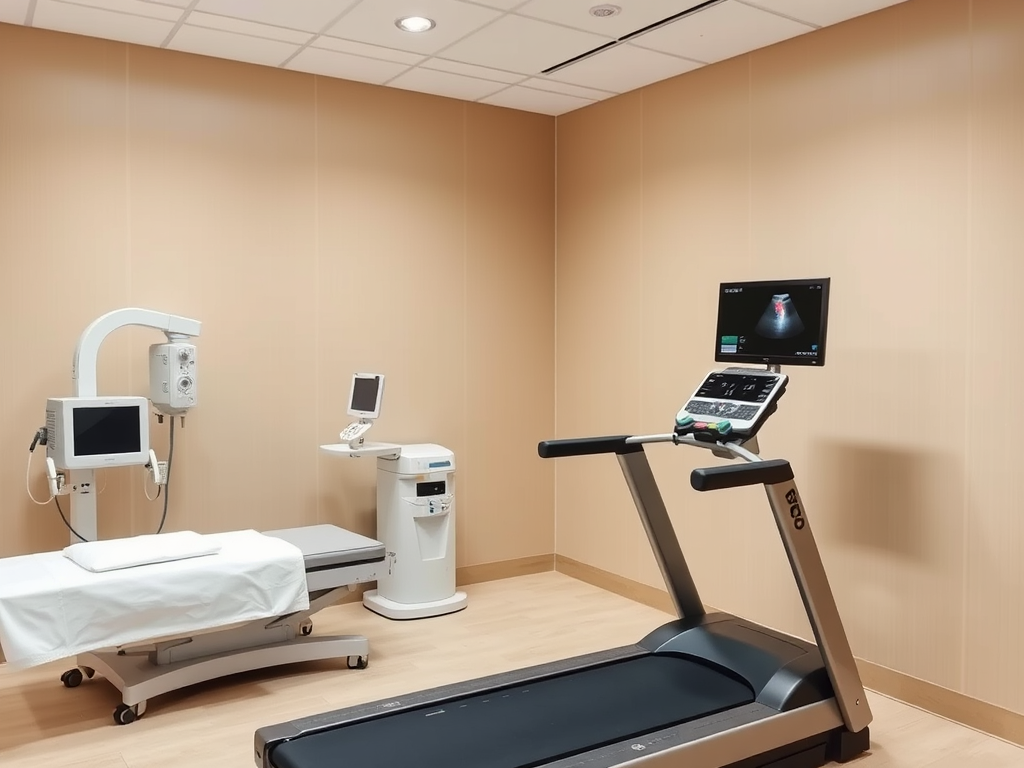
Baseline Visit 1 began with something I’ve always wanted to do… a maximal heart-rate test. Of course, first came the preliminaries. A baseline echocardiogram confirmed I was clear to participate, followed by a general physical and neurological exam. Everything checked out. I was good to go.
“Alright,” the researcher said, “we’re going to place this mask over your face. You will bite down on the mouthpiece and make sure it seals over your gums. Your nose will be clipped so all breathing comes through the mouth. There is a drain piece for saliva, make sure you don’t swallow it. We’ll monitor your pulse oxygen and blood pressure throughout.”
Then came the instructions. The treadmill would speed up until I reached my age-calculated maximal heart rate. Once there, speed would stay constant but the incline would be increased by about 2.5% every few minutes. I’d need to point to a chart to indicate how hard I felt I was working. Thumbs up if you’re good, Thumbs down if you’re not and open hand swiped by throat to indicate Stop.
Perfect, I thought. “Two Thumbs-up Let’s do this!”
The mask slid over my head, the tube connected to the machine at the right of the treadmill. I centered myself on the machine and matched the belt stride for stride.
“We’re almost at your calculated rate. How hard are you working?” they asked.
I pointed to – Very Light.
“Pulse ox?” The researcher asked the intern positioned to the left of me at the treadmill. “98%,” she reported.
“Great. Beginning the test in 5…4…3…2…1.”
The incline rose. I kept a steady rhythm, hearing the doctor murmur with curiosity in the background as he observed the computer monitor. Five people were in the room: a doctor, a clinician, two researchers, one intern. With the treadmill facing a plain beige wall. Everyone behind me. So that’s what I focused on – the beige canvas.
After the first minute: “How hard are you working?” The researcher asked me. I pointed to “Light” on the laminated chart presented to me by the intern. Blood pressure was yelled out – 144/78. “We’ll increase again. How are you doing?” Thumbs up. Still feeling good.
Round after round, the incline inched upward. My arms began to pump, my breathing deepened, but I still felt strong. “I could keep this pace for six hours,” I thought.
“Pulse ox?” The researcher asked
“97%” replied the intern.
Eventually, the sweat came. My heart thudded against my ribs. My face flushed behind the mask as I gulped air through the tube. “Keep going… every second counts… Can you give me more time?” the researcher asked. Thumbs up. I wasn’t anywhere near passing out.
“How hard are you working?” I pointed to “Very Hard” this time.
Another incline. I heard the doctor gasp in the background. The clinician whispered, “Wow, that’s amazing.”
“Pulse ox?”
“It’s reading 91%!”concern flickered in the intern’s voice.
The clinician moved toward the echocardiogram machine, positioned to the far right of the room, preparing for the moment I stepped off. My vision began to vignette….darkness creeping inward. The beige wall shifting toward gray.
“The segment is almost over. Can you keep pushing?” Thumbs up again. If I wasn’t completely out, I could keep going. I thought.
Now drenched, heart hammering, lungs burning…. but still moving.
“Keep going… keep going.. every second counts” The researcher cheered. I held on until the end of the segment. Then the treadmill stopped.
I stepped off the belt, grabbed the handrails, and the second researcher quickly removed the mask. They all guided me back to the exam bed for the final echocardiogram. I lay still, eyes closed, letting my senses return to normal. As the clinician quickly removed the velcro straps on the black cotton shirt exposing and my left chest wall to press down with the transducer beneath my left breast. I could still feel my heart beating.
“So… how did I do?” I asked, while she observed the monitor.
“You did amazing,” the clinician said. “Your heart rate was up there.”
“What about my VO₂ max reading?”
The clinician looked at the researcher. “Can she know it?”
“No,” they said. “We’ll share results at the end of the study.”
“Well… does it match my watch? I have a reading of 40.”
She smiled. “Close. Pretty close.”
The final echo looked good. The test was over.
And me? I felt electric….flooded with energy.
I was asked to change into my regular attire and walk out of the room. I couldn’t help but try to take a peek at the reading glancing at the treadmill monitor and could have sworn I saw a VO2 reading of 36.
Had an echocardiogram today, watched my own heart moving across the screen, sound waves bouncing through my chest to form a real-time portrait of the strongest muscle I have. It felt surreal… hearing the blood flow and the rhythmic opening and closing of valves through heart chambers.
December is the month where treatment begins. Dates are still unfolding, but this week is all about baseline diagnostics, the groundwork before the action officially starts. One step at a time.
Moving forward, this blog becomes my journey log. A space to process, to share, and to stay grounded in the present…..the focus is one day at a time.
If you’re here because you’ve ever wondered what this path looks like, welcome. I was once like you a normal person going about my day now a patient tattered by the label- cancer patient. Let’s walk through this together and see how the story unfolds. God knows what is ahead, but I’ll remain optimistic.
The Oncologist told me I’d be losing my hair once treatment starts. It wasn’t something I wanted to hear. My hair has always felt like my life force….my own version of Samson’s strength…..and imagining myself without it felt devastating.
But after the initial sting, I did what I’ve been doing with everything lately, I gathered myself, and figured out how to be prepared. My husband and I visited a local wig shop, a world I never imagined I’d step into. It was a small hair salon with a well-lit mirror and two chairs.
A row of wigs lined a shelf from different colors, length, and style. Faux hair crafted to meet a woman at one of the most vulnerable moments of her life, offering her a soft shield as perhaps toxic chemicals enter her bloodstream, destroying sick cells along with everything else in their path. It struck me that behind every wig is someone’s battle, someone’s story. Mine will soon join them.
The shop owner, kind enough to come in on a Sunday, greeted me warmly. She studied me for barely a second before saying, “You’re definitely a 1.” I blinked in confusion until she explained the color scale: 1 is the darkest, 60 is pure white. I had no idea hair shades were cataloged so clinically.
She brought out boxes from another room…with shoulder-length styles, bangs, layered cuts and taught me how to place a wig on properly. Find the side tabs, line up the edges, lift them by the strands, not by dragging the lace. She said it as if she were training me to handle something sacred and maybe she was.
Then came the eyebrow conversation. I hadn’t even thought about that. “Once your hairline goes, remember it’s four finger-widths from your brows,” she said. “And if your eyebrows thin, you’ll want to fill them in, otherwise the wig won’t look right.”
Makeup has never been part of my life. She gently showed me a small box of powders, explaining stencils and shading, another skill I never expected to need.
In the end, I chose two wigs, one short with bangs for convenience, and one long…. closer to how I look now, for comfort. My husband nodded with that steady approval he gives when he knows I need reassurance.
We left with instructions on cleaning, brushing, storage… an entire new chapter I hadn’t planned on spending my weekend learning. I imagine countless women have walked this same path, each one wondering, as I did, how did I get here? The mind searches for reasons. Maybe it was the few years I smoked to survive night shifts. Maybe it was my old diet, the chemicals in my workplace, or simply the randomness of biology. I’ll probably never know. What I do know is this, I’m here now. It was caught early.
My Gobi March registration has been deferred to 2027. The race director responded with kindness and understanding. I look forward to crossing that finish line someday, dust-covered, exhausted, transformed with my long black hair tied back. But first, I must prepare… mentally. One step at a time.
5:30 a.m. I woke up and checked my email before my eyes were even fully open. A new test result has been posted…read the alert.
I reached for my glasses on the nightstand, opened MyChart, and there it was….. the pathology results I’d been waiting on all weekend.
Invasive carcinoma…… Not the words I wanted to see.
I woke my husband and whispered, “They posted the results… carcinoma.” He didn’t need any more explanation. He just held me. “I’m sorry” he said
I made a joke……because that’s what I do when things get too real. “Well… can I finally get the long-haired dachshund I always wanted?” “Yes,” he said. “We can get a dog now.”
Small victory.
I pictured an elderly rescue…..one who just needs somewhere soft to land for his final years. Definitely a boy… I have no energy for a dramatic little girl dog.
Around 10 a.m. the physician called. I pretended I hadn’t read the report already. “Do you have time to talk?” “Yes.” I said. “It is cancer. Not benign.” She said.
“Ok.” I answered. She paused……. maybe waiting for emotion I didn’t have yet. I wasn’t sure what the correct response should be… so I stayed quiet.
She then proceeded to tell me the MRI would be moved up and went through the details of what happens next.
“We’re still piecing everything together.” I listened, and then I drifted…..”She does this every day…” I thought.
Delivering life-altering news to strangers. I couldn’t do what she does.
So… the waiting is over. Now it’s one day at a time……… But then again. It’s always been that way, hasn’t it?
I don’t want any of this. I wish things could simply unravel the way nature intended.
Or maybe nature did intend this.
I don’t know.
Life makes no sense to me.
But…. there’s an adventure waiting for me next summer, so I’m choosing to move forward with whatever…. I can’t say I really care at this point.
If I’m being honest… I’d rather die in the desert anyway.
But for now—today—I’m still here. So we keep going. I’ll just have to shift my mental focus… that’s all.
Waiting breeds anticipation. What is anticipation, really….at least in physiological terms? It’s the body’s quiet chemistry experiment: neurotransmitters surging, hormones firing, the amygdala alert. Cortisol and norepinephrine rise, with a delicate dash of dopamine, hope and fear mixing in the bloodstream.
While those chemicals play their dance, the mind searches for distraction. Maybe by finishing that half-completed 1,000-piece Disney Stitch puzzle abandoned days ago. Or by curling up in bed, trying to ignore the dull ache and the bruised puncture site that throbs like a simple reminder of uncertainty. It’s a kind of suspended malaise, life moving, but slower now.
I think again of the circle of life, how, when Norman passed away a couple years ago, and Belinda was born. Death and birth, endings and beginnings, braided so tightly you can’t tell where one stops and the other begins. Now, it feels like the universe is staging a repeat: my boss’s daughter about to arrive as I await results that could mark another ending….or a continuation of my own story.
I hope for the latter, but we don’t know. We wait.
Anticipation….it’s like sending a text and watching the screen, willing a reply to appear. The same surge of chemicals. The same pulse of aliveness. In this waiting, I am acutely present, every sound is amplified. Every ding on my phone a jolt of hope, maybe it’s MyChart. Maybe the answer is here.
Everything around me feels placed with intention. Every object, every breath, part of the stillness before revelation. What will it be?
I tell myself I’ll prepare for both outcomes. I’ll steady myself either way. For now, we remain mid-air…..like a coin tossed high, spinning, glinting, turning, until the inevitable drop decides my fate.






 Journaling was Recommended